
Frank H.T. Rhodes Class of ’56 Professorship Program
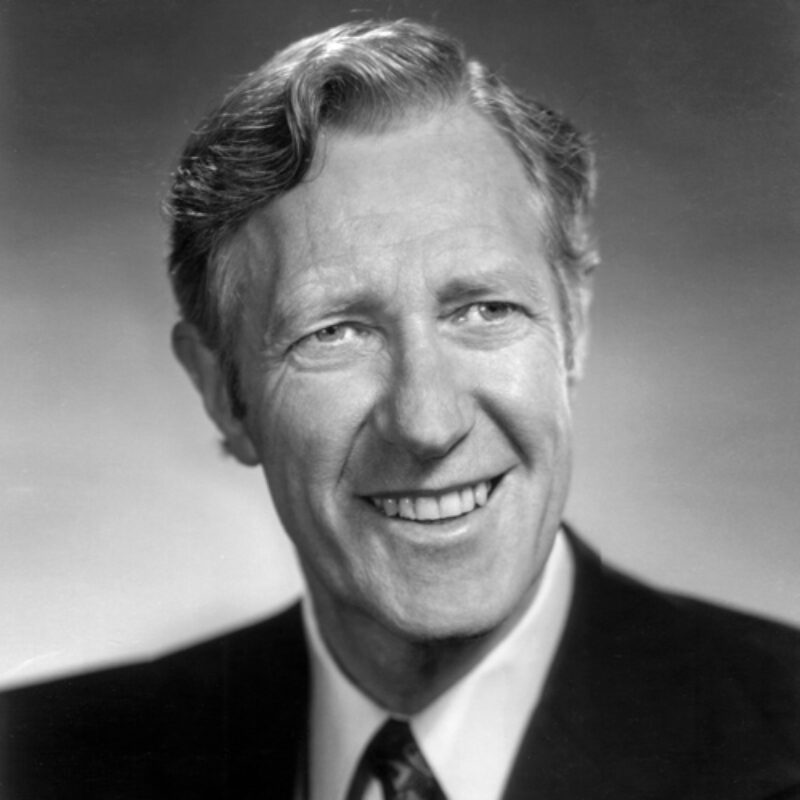
To commemorate their 40th reunion, the Class of 1956 initiated an endowment to create the Frank H. T. Rhodes Class of ’56 University Professorship in honor of Cornell’s ninth president, Frank H.T. Rhodes (1977–95). The first Rhodes Class of ’56 Professors were appointed in 2000.
ABOUT THE AWARD
The Rhodes Class of ’56 Professorships are intended to strengthen the undergraduate experience by bringing to Cornell individuals from every walk of life who represent excellence of achievement.
The purpose of the Rhodes Class of ’56 Professorship is to strengthen the undergraduate experience by bringing to the university individuals from every walk of life who represent excellence of achievement.
ELIGIBILITY
The professorship is awarded to those at the pinnacle of their careers in every field that enriches and expands our collective ability to grow and thrive: in scholarship, public life, the professions, and the arts. Such individuals share a lifetime of achievement with Cornell students.
APPOINTMENT LENGTH
Rhodes Class of ’56 Professors are appointed for a period of three years, with the possibility of renewal for two additional years, and are considered full Cornell faculty.
SELECTION
Individuals are chosen on the basis of applications submitted jointly by (at minimum) a West Campus House and an academic department.
CAMPUS EXPERIENCE
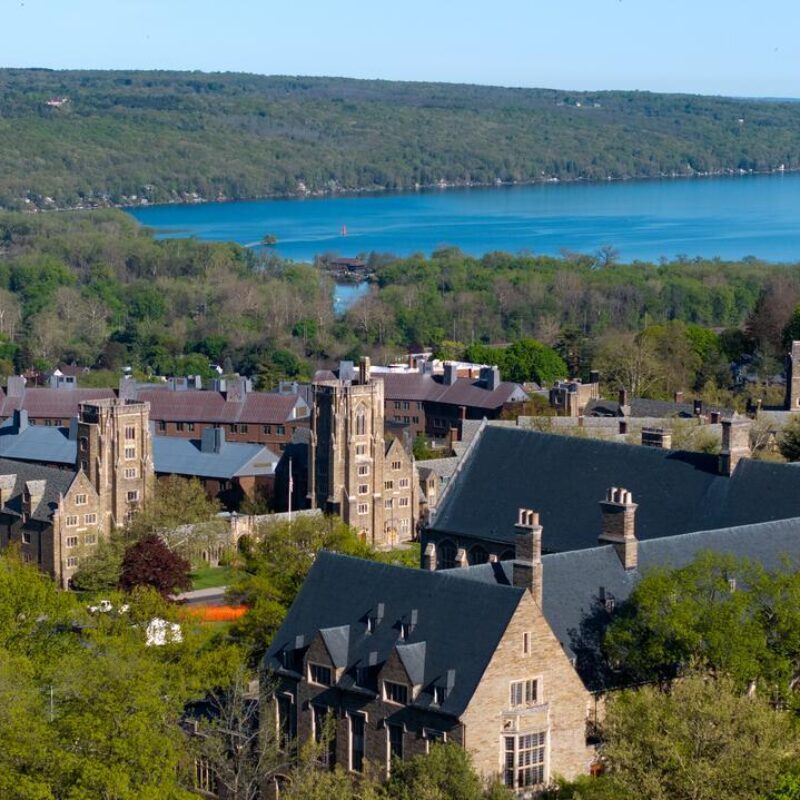
Individuals chosen to be Rhodes Class of ’56 Professors will typically visit Ithaca for one week each year they serve.
During their time on campus, Rhodes Professors will:
- be invited to reside in one of the West Campus Houses, where they will spend much of their time interacting with the resident undergraduates.
- give lectures or performances in already scheduled classes as well as for the Cornell community at large.
- be involved in meetings and discussions with members of the House in which they reside.
VISITS & EVENTS
Information forthcoming.
CALL FOR NOMINATIONS
Information forthcoming.
SELECTION COMMITTEE
Information forthcoming.
FORMER AWARDEES
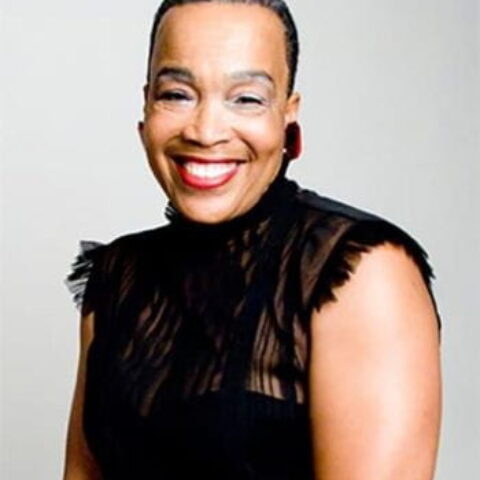
2017-23: Rhodessa Jones
BIO
Rhodessa Jones (2017-23) is Co-Artistic Director of the San Francisco acclaimed performance company Cultural Odyssey. She is an actress, teacher, singer, and writer. Jones is also the Director of the award winning Medea Project: Theater for Incarcerated Women, which is a performance workshop that is designed to achieve personal and social transformation with incarcerated women and women living with HIV.
Thanks to Jones, art students from all cultures can flock to universities and learn non-European methods to develop their authentic voices, to give voice to the voiceless, and transform society in the process. Jones always challenged her students to think critically about the vital role of the arts and humanities in community action.
As a recipient of the U.S. Artist Fellowship, Jones expanded her work in corrections and for educational institutions internationally. She conducted the Medea Project in South African prisons, working with incarcerated women and trained correctional personnel and local artists. In 2012, the U.S. Department of State Educational and Cultural Affairs Bureau named her as Arts Envoy for the U.S. Embassy.
In 2015, Jones received the Theatre Practitioner Award presented by Theater Communications Group. The award recognizes “a living individual whose work in the American theatre has evidenced exemplary achievement over time and who has contributed significantly to the development of the larger field.”
In 2016, she received a Theatre Bay Legacy Award presented to individuals that have made “extraordinary contributions to the Bay Area theatre community.” And in 2017, Jones was named a Montgomery Fellow at Dartmouth University. Other residencies in the United States include Brown University and Scripps College Humanities Institute. Jones is a recipient of an Honorary Doctorate from California College of the Arts, SF Bay Guardian’s Lifetime Achievement Award, SF Foundation Community Leadership Award, Non-Profit Arts Excellence Award by the SF Business Arts Council, and an Otto Rene Castillo Award for Political Theater.
Most recently, Jones was an Actress/Voice Talent for the character “Lulu” in Disney’s (Pixar) SOUL, a feature length animated film that won two Golden Globe Awards for Best Animated Feature and Best Original Score.
Visit
October 17-21, 2022
Rhodessa Jones
° Co-Artistic Director, Cultural Odyssey
° Founder and Artistic Director, Medea Project: Theater for Incarcerated Women
° Faculty host: Sara Warner (Associate Professor, Dept. of Performing and Media Arts; Director, LGBT Studies)
Rhodes ’56 Keynote Event
once upon a time in a place called NOW: an interactive storytelling workshop for artists, activists and educators
Thursday, October 20, 2022, at 5pm
Film Forum, Schwartz Center for the Performing Arts
Open to all. Reception to follow.
This event will also feature workshop facilitators Angela Wilson and Felicia Scaggs, core members of the Medea Project.
Cosponsored by the College of Arts and Sciences; Dept. of Performing and Media Arts; American Studies Program; LGBT Studies ; and Feminist, Gender & Sexuality Studies.
2000-17: Rhodes Class of ’56 Professors
Dr. Ramaswami Balasurbramaniam (2012-17)
Mathis Wackernagel is co-creator of the Ecological Footprint and President of Global Footprint Network. He completed a Ph.D. in community and regional planning with Professor William Rees at the University of British Columbia, where his doctoral dissertation developed the Ecological Footprint concept. Wackernagel also earned a mechanical engineering degree from the Swiss Federal Institute of Technology. He previously served as director of the Sustainability Program at Redefining Progress in Oakland, California, and ran the Centro de Estudios para la Sustentabilidad at Anáhuac University in Xalapa, Mexico. Wackernagel’s awards include the 2018 World Sustainability Award, the 2015 IAIA Global Environment Award, being a 2014 ISSP Sustainability Hall of Fame Inductee, the 2013 Prix Nature Swisscanto, 2012 Blue Planet Prize, 2012 Binding Prize for Nature Conservation, the 2012 Kenneth E. Boulding Memorial Award of the International Society for Ecological Economics, the 2011 Zayed International Prize for the Environment (jointly awarded with UNEP), an honorary doctorate from the University of Berne in 2007, a 2007 Skoll Award for Social Entrepreneurship, 2006 WWF Award for Conservation Merit and 2005 Herman Daly Award of the U.S. Society for Ecological Economics.Leland (Lee) Pillsbury ’69 (2010-13)
Leland Pillsbury ’69 is a venture capitalist with a special focus on the hospitality industry. He is a managing director of Thayer Ventures, an early-stage venture-fund investment company that invests in technology companies in the hospitality and travel industry. He is also founder and co-chairman of Thayer Lodging Group, where he served at CEO until the sale of the company in 2014. Named Entrepreneur of the Year by Cornell University in 2016, Pillsbury has led over 40 mergers and acquisitions, and founded or co-founded over 15 companies since leaving Marriott International, where he served for 20 years in a variety of positions, becoming Marriott’s youngest executive vice president and corporate officer. Pillsbury is a member of the Executive Committee of the Cornell University Board of Trustees, co-chairman of the Buildings and Properties Committee, member and former vice chairman of the Investment Committee overseeing the university endowment, and member of the Finance, Development, and Governance committees. He is chairman of the major gifts committee for his class.
Rush Spencer Wells (2009-14)
Peter Eisenman ’56 (2008-11)
Peter Eisenman ’56 is an internationally recognized architect and educator. The principal of Eisenman Architects, he has designed large-scale housing and urban design projects, innovative facilities for educational institutions, and a series of inventive private houses. His current projects include the six-building City of Culture of Galicia in Santiago de Compostela, Spain, and a large condominium housing block in Milan, Italy. Eisenman has taught at Cambridge University, Harvard University, Princeton University, Ohio State University, and The Cooper Union. His many books include Eisenman: Inside Out, Selected Writings 1963–1988; Written into the Void, Selected Writings 1990–2004; Tracing Eisenman; and Giuseppe Terragni: Transformations, Decompositions, Critiques. From 1967 to 1982 he was the director of the Institute for Architecture and Urban Studies in New York City, which he founded.
Robert Moses (2007-11)
Robert Moses is founder of the Algebra Project, which uses mathematics as organizing tool for quality education for all children in America. A MacArthur Foundation Fellow from 1982-1987, Moses used his fellowship to begin the Algebra Project. With support of the National Science Foundation, the Algebra Project works with middle and high school students who previously performed in the lowest quartile on standardized exams, proposing that they attain a high school math benchmark: graduate on time in four years, ready to do college math for college credit. Moses received a B.A. in Philosophy from Hamilton College in 1956, and an M.A. in Philosophy from Harvard University in 1957. He taught mathematics at the Samé School in Tanzania, East Africa from 1969-76, when he returned to the United States and re-entered the doctoral program in Philosophy at Harvard. Moses directed the Student Non-Violent Coordinating Committee’s Mississippi Voter Registration Project from 1961-1964; was co-Director of the Council of Federated Organizations 1962-1964, and was a lead organizer for the 1964 Mississippi “Freedom” Summer Project, parachuting Mississippi Freedom Democratic Party to 1964 National Democratic Convention in Atlantic City.
General Anthony Zinni (2007-10)
General Anthony Zinni is a retired four-star United States Marine Corps general. He served his country in numerous diplomatic roles as the U.S. special envoy to Israel and the Palestinian Authority and in missions to Pakistan, Somalia, Eritrea and Ethiopia. General Zinni retired from the U.S. Marine Corps in 2000, after a distinguished 39-year career that took him to over 70 countries in many command assignments. In his final tour of duty, from 1997 to 2000, he was commander-in-chief of the U.S. Central Command. In his military career, General Zinni earned 23 personal awards and 37 unit, service, and campaign awards. General Zinni joined the U.S. Marine Corps in 1961 and was commissioned an infantry second lieutenant in 1965, after completing his undergraduate degree in economics at Villanova University. He earned graduate degrees in international relations from Salve Regina University and in management and supervision from Central Michigan University. General Zinni has been awarded honorary doctorates from Villanova University, College of William and Mary, and Maine Maritime Academy. He has held academic positions that include the Terry Sanford Distinguished Lecturer at Duke University; Stanley Chair in Ethics at the Virginia Military Institute; Nimitz Chair at the University of California, Berkeley; Hofheimer Chair at the Joint Forces Staff College; and Harriman Professorship of Government at the Reves Center for International Studies at the College of William and Mary.
Dr. Temple Grandin (2006-10)
Dr. Temple Grandin is an American scientist and industrial designer whose own experience with autism funded her professional work in creating systems to counter stress in certain human and animal populations. Dr. Grandin obtained her B.A. at Franklin Pierce College in 1970. In 1974, she was employed as Livestock Editor for the Arizona Farmer Ranchman and also worked for Corral Industries on equipment design. In 1975, she earned her M.S. in Animal Science at Arizona State University for her work on the behavior of cattle in different squeeze chutes. Dr. Grandin was awarded her Ph.D in Animal Science from the University of Illinois in 1989 and is currently a Professor at Colorado State University. Dr. Grandin has received numerous awards including the Meritorious Achievement Award from the Livestock Conservation Institute, named a Distinguished Alumni at Franklin Pierce College and received an honorary doctorate from McGill University, University of Illinois, Texas A&M, Carnegie Mellon University, and Duke University. She has also won prestigious industry awards including the Richard L. Knowlton Award from Meat Marketing and Technology Magazine and the Industry Advancement Award from the American Meat Institute and the Beef Top 40 industry leaders and the Lifetime Achievement Award from The National Cattlemen’s Beef Association. Dr. Grandin’s books include Emergence: Labeled Autistic (1986; with Margaret M. Scariano) and Thinking in Pictures, and Other Reports from My Life with Autism (1995).
Cynthia McKinney (2003-06)
Cynthia McKinney was the first African-American woman from Georgia to serve in Congress when she was elected to the House of Representatives in 1992. With a background in foreign policy, she emerged as an internationally renowned advocate for voting rights, human rights, and the strengthening of business ties between Africa and the United States. McKinney earned a bachelor’s degree in International Relations from the University of Southern California in 1978. She later pursued graduate studies at the Fletcher School of Law and Diplomacy at Tufts University in Medford, Massachusetts. In 1984, she served as a diplomatic fellow at Spelman College in Atlanta. She then taught political science at Agnes Scott College in Decatur and at Clark Atlanta University.
John Pilger (2003-06)
John Pilger is an Australian journalist, writer, scholar, and documentary filmmaker. For his work as a war correspondent, Pilger was twice named Journalist of the Year – British journalism’s highest award – in 1967 and 1979. He was also named as International Reporter of the Year in 1970 and was awarded the United Nations’ Associate Media Peace Prize for 1979-80 and 1980-81. As a filmmaker, Pilger has won an American TV Academy Award, an Emmy, and a British Academy Award. His 1979 film,Year Zero: the Silent Death of Cambodia, was included by the The British Film Institute among the ten most important documentaries of the twentieth century. And his 1989 documentary, Cambodia: Year Ten, was the winner of the George Foster Peabody Award. In 1991, the British Academy of Film and Television Arts honored Pilger with The Richard Dimbleby Award for a lifetime of excellence in television journalism and documentary film-making. In 2003, Pilger was awarded the prestigious Sophie Prize for ’30 years of exposing injustice and promoting human rights. Pilger’s recent work focuses on the South- and Middle-East, South Africa, Australia, aspects of globalization, and the role of journalism.
Thomas Simons (2003-06)
Thomas Simons is an American diplomat and academic whose U.S. Foreign Service career spanned 35 years, from 1963 to 1998. Simons specialized in East-West relations, including service in Warsaw, Moscow, and Bucharest, and acted as Deputy Assistant Secretary of State responsible for Eastern Europe and the Soviet Union from 1986 to 1989. Simons served as ambassador to Poland from 1990 to 1993 and coordinator of U.S. assistance to the new independent states of the former Soviet Union from 1993 to 1995. Simons later served as ambassador to Pakistan from 1996 to 1998. He also was a consulting professor at Stanford University’s Center for International Security and Cooperation (CISAC). Between 1998 and 2002, Simons served as a consulting professor on 20th-century international history at Stanford. He now is a Visiting Scholar of the Program at Harvard University’s Davis Center for Russian and Eurasian Studies. Simons is the author of dozens of articles on Central and East European history and on U.S. policy and East-West relations in South Asia. He has also written numerous books, including The End of the Cold War? (1990) and Eastern Europe in the Postwar World (2nd revised edition, 1993), both published by St. Martin’s Press; and Islam in a Globalizing World (Stanford University Press, 2003). Simons holds a B.A. from Yale and an M.A. and Ph.D. from Harvard.
Bill Nye ’77 (2001-05)
Bill Nye is an American science educator, engineer, comedian, television presenter, author, and inventor, with a mission to help foster a scientifically literate society and to help people everywhere understand and appreciate the science that makes our world work. He is a 1977 graduate of Cornell’s Sibley School of Mechanical and Aerospace Engineering. As a student at Cornell, Nye was introduced to the wonders of astronomy in a class taught by Professor Carl Sagan. Sagan co-founded The Planetary Society, the world’s largest space-interest group whose mission is to empower the world’s citizens to advance space science and exploration. After joining as a Charter Member in 1980, Nye is now the CEO of the Planetary Society. Under his leadership, the non-for-profit Society is growing and becoming more influential having members in 130 countries. Nye is best known for his weekly, half-hour, Emmy Award-winning shows, “Bill Nye, The Science Guy,” which aired on PBS from 1992 to 1998. The show won 18 Emmys in five years. To commemorate the series, the Bill Nye The Science Guy original lab coat is on display at the “T is for Television” exhibit in the Smithsonian National Museum of American History. Nye has also written numerous kids’ books which weave real-world science in a fun accessible way for a range of ages from elementary to middle school.
Janet Reno ’60 (2001-04)
Janet Reno was the first woman appointed to the role of U.S. Attorney General in 1993 by President Bill Clinton. Serving as Attorney General. Reno went on to become the longest serving attorney general in the 20th century, having held the role for eight years. Reno received her B.A. in Chemistry at Cornell in 1960 and attended Harvard Law School, having graduated in 1963. In 1971, Reno was named staff director of the Judiciary Committee of the Florida House of Representatives. In 1973, she was named counsel for the state senate’s committee responsible for revising the Florida Criminal Code. And in 1973, Reno accepted a position with the Dade County State Attorney’s Office, which has jurisdiction over the Greater Miami area. In 1978, the Governor of Florida appointed her to serve at State Attorney in Miami, making her the first woman to hold that top prosecutor position. She stayed in that position until appointed as U.S. Attorney General in 1993. In 1981, Reno was awarded the American Judicature Society Herbert Harley Award, and in 1983, she was named the Public Administrator of the Year for the American Society for Public Administration, South Florida Chapter. Reno also received the Medal of Honor Award from the Florida Bar Association in 1990.
Richard Meier ’56 (2000-05)
Edward Scolnick (2000-05)
Edward Scolnick is a summa cum Laude graduate of Harvard College, and of Harvard Medical School, who began his scientific career as an independent researcher within the National Institutes of Health (NIH). Starting as a research associate at NIH, Scolnick rose through the scientific ranks while directing his own research program. He became head of the Genetics Section and eventually Chief of the Laboratory of Tumor Virus Genetics within the National Cancer Institute before joining Merck Research Laboratories in 1982. From 1982 to 2003, Scolnick served as president of Merck Research Laboratories; executive vice president for science and technology at Merck & Co., Inc.; executive director and vice president in the department of virus and cell biology and senior vice president for basic research at Merck Research Laboratories. Scolnick is an elected member of the National Academy of Sciences, the American Academy of Arts and Sciences, and the Institute of Medicine. He served on the Board of Directors of Merck & Co., Inc. from 1997 to 2002; the Board of Councilors for the National Institute of Mental Health from 1998 to 2002; and the FDA Science Board from 2000 to 2002.
Gerri Jones (2000-03)